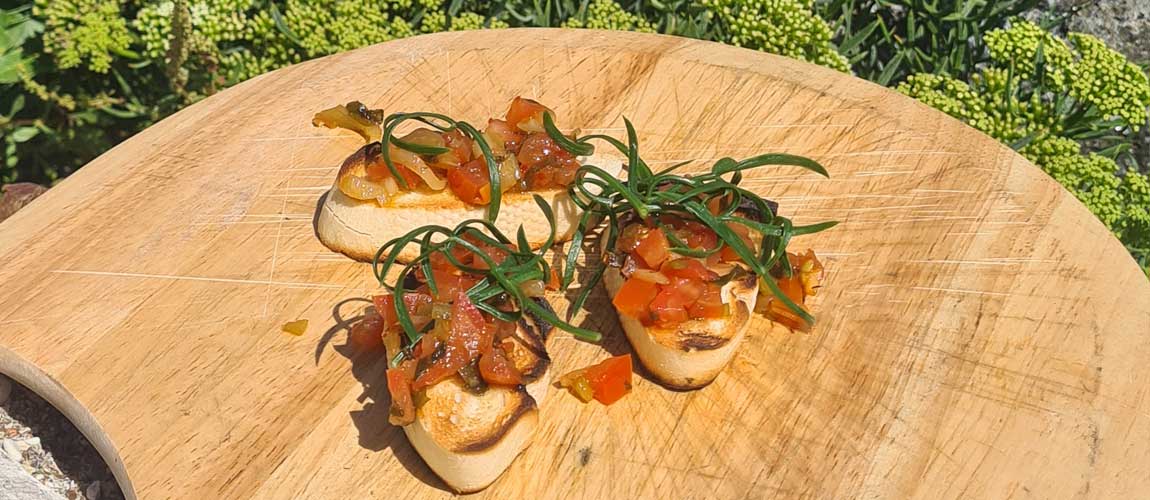
Expand the use of fermented wild garlic with this foraged take on an Italian classic...
A lovely way to use your lacto fermented wild garlic in the summer months together while practicing your fire skills for the toasting of the bread. Add some freshly foraged and blanched coastal vegetables and you've got yourself a lovely addition to a beach picnic. I like to light the fire by dropping a spark onto a King Alfred's Cake fungus and then using the resultant ember to bring a ball of hay to a flame. This is a method of fire lighting well suited to coastal conditions and the sea breeze becomes helpful rather than an obstacle.
Take the ready made bruschetta mix, sliced bread and fire lighting materials with you and gather some coastal sea plants to be blanched. Use the initial flame of the fire to blanche the vegetables for 30 seconds and then use the embers of your fire wood to toast the thinly sliced french stick.
Ingredients
Ingredients
Method
- Quarter the tomatoes and remove the seeds and that bit from where the tomato is attached to the stem.
- Coarsely chop the remaingin tomato flesh and leave to drain in a sieve.
- Take 100g of lacto fermented wild garlic and squueze out the juice - add the juice back to your ferment vessel.
- Chop the wild garlic and mic it thoroughly with the tomato.
- Chop the wild marjoram and mugwort and add to the mix.
- Add your olive oil and balsamic vinegar measures to the mix.
- Thoroughly mix all the ingredients together and place in the fridge to meld for at least a few hours or better still overnight.
Method
- Chop 1kg Wild Garlic and mix with 20g to 30g of salt - squash down and leave overnight for juices to extract.
- Compress the well mixed contents to expell air and also to submerge under the wild garlic juices.
- Place a glass or other 'weight ' ontop of the vegetables to raise the liquid level further to help submerge the vegetables.
- Leave at least a 3rd of the vessel empty to allow for the ferment to breath as the bacteria does it's thing.
- Each day check the ferment and push the vegetable mass back down to expel the gas and 'burp' the ferment.
- The ferment should be ready to start eating after around a week - depending on the warmth of where the fermentation is taking place.
- After two weeks place inside a fridge to slow down the fermentation process - or freeze to stop in it's tracks.
- Enjoy!